“People protect what they love.”
— Jacques Yves Cousteau (Oceanographer and environmentalist)
When I first saw a whale surfacing from the sea, it was a dream-come-true moment for me. When the waves hit the shore, the sea breeze chills you, and a massive creature suddenly emerges in the open sea, leaving an indelible mark. Whale watching is more than a tourist spot, it’s an opportunity to see nature as the most powerful and peaceful.
But such experiences come with responsibilities. I mean, it’s our responsibility to maintain a safe and meaningful environment for whales and to respect marine wildlife. Therefore, today I will share some of the dos and don’ts while whale watching that you all should be aware of.
So, be ready for whale watching at your favourite location, or else you can choose a private whale watching near Kona.
Why Responsible Whale Watching Matters on Your First Tour
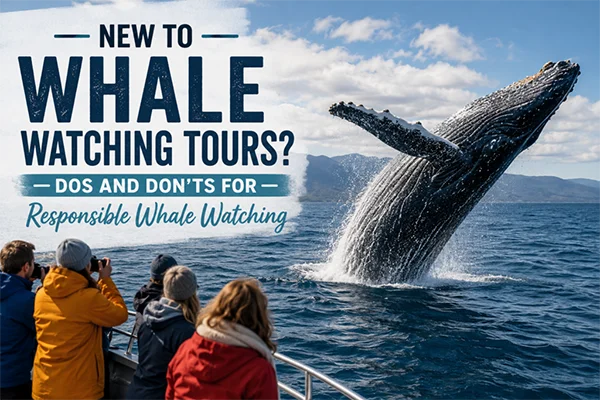
Responsible whale watching is crucial, as whales are sensitive marine mammals that require tranquil conditions at sea to communicate, feed, and migrate. They are sometimes affected by the natural behaviour of human activities, particularly from boats that are too close and make loud noises in the water.
It is important to have ethical whale watching for the following reasons:
- Ethical tourism helps to promote conservation of the marine environment and promote sustainable travel.
- Safe distances help whales act naturally without fear and disturbance.
- Responsible tours minimize pollution, noise, and environmental damage in the ocean.
- Tourists gain more knowledge about marine ecology and the preservation of wildlife.
- Operators who are licensed whale watchers are generally very careful and follow certain rules and regulations to ensure safety and protect the environment.
- Encouraging ethical tour companies can help in the long-term conservation of whale species all over the world.
Essential Dos for a Safe and Ethical Whale Watching Experience
When we are going whale watching, it’s our responsibility to make them feel safe. Thus, here are some of the essential dos for a safe and ethical whale watching experience.
1. Select Responsible Tour Operators:
Whale-watching operators keep safe distances from whales, do not interfere with their natural movement, and comply with the local environmental laws. They also provide education to tourists on marine life and conservation. Such operators can help reduce the risks to whales and promote sustainable tourism.
2. Don’t approach whales:
Unless the whale is asleep, fishing ships and boats should not approach it too closely, since this may disturb the whale’s feeding, resting, or migrating habits. Ethical whale watching enables whales to move freely without being threatened. Avoid disturbing or encircling animals by tourists and boat operators; respect legal distances. A safe distance helps to keep humans safe as well as animals.
3. No Loud Noise and Disturbance:
Whales are very sensitive to sound as they use it to communicate and navigate underwater. They can be stressed and confused by loud noises such as shouting, music and engine noise. So, be calm and quiet, avoid sudden movements or unnecessary disturbances. Whales act in their natural state in a peaceful environment.
4. Preserve the Marine Environment:
Clean Water is a Responsible Whale Watchers Duty task. Avoid dumping garbage in the sea and minimize the use of plastic items that can impact marine life. The use of eco-friendly products, including reusable bottles and reef-safe sunscreen, can help lessen pollution. For species such as the Humpback Whale and Blue Whale, a healthy ocean environment is crucial for their survival.
5. Be patient and respect wildlife:
Whale watching is supposed to be seeing the animals in their natural habitat, not getting up close and personal. While sightings are always uncertain, tourists should take into account the unpredictable nature of wildlife. Patience and responsible actions make for a more fulfilling experience and ensure the safety and comfort of whales in their natural habitat.
Important Don’ts Every Traveler Should Avoid
Here are some things to avoid doing while traveling.
1. Never ignore local rules and regulations:
When visiting any location, travelers always need to read the basic rules that they must follow, such as dress codes, areas to avoid, and expectations about the behavior they should display in public. Following the local ordinance is a way of showing respect for the community and a better travel experience.
2. Don’t disrespect local culture and traditions:
Travelers’ most common mistake is acting in a manner that is acceptable at home but not abroad. This could mean wearing the wrong clothing in a religious area, making noise in a restful place, or not abiding by the local traditions. This will help you to interact with the locals positively and avoid miscommunication by being mindful and respectful of their culture.
3. Do not forget Personal Safety Precautions:
It is important for travelers to never presume the complete safety of any location. Failing to take the steps necessary to keep yourself safe, such as watching your belongings, avoiding certain places at night, or tending to strangers without caution, may create issues. Common sense and alertness will be helpful, particularly in new areas.
Tips to Capture Great Photos Without Disturbing Wildlife
As you know, the do’s and don’ts of whale watching, you might have got a few ideas of clicking pictures as well. Still, here is a focused section for you to learn some tips to capture great photos without disturbing wildlife.
- Avoid flashlights: The natural environment can be affected, and the marine animals can be disturbed by bright flashes. So, if it is possible, take advantage of natural lighting for better wildlife photography.
- Be patient: Whales don’t come out of the sea when you call them. Don’t rush to take pictures all the time; just wait for the right time. Sometimes, the best photographs will be when you observe them in their natural habitat.
- Use Zoom instead of coming closer: A camera with good zoom capability allows you to capture stunning shots without invading the whales’ space. If the safety of the animals is not foremost in responsible photography, there are no close-ups.
Final Thoughts
Whale watching is an engaging experience of the beauty and fragility of the natural world. It’s an experience that can be both thrilling and heart-wrenching for those visiting for the first time. But the primary concern should always be to protect marine life. Ethical tour operators, respecting the limited or wildlife zones, limiting pollution, and adhering to responsible tourism practices can all help preserve the oceans for generations to come.
Responsible whale watching is not only about seeing whales, but it’s also about ensuring they continue to live in the wild for many years to come.
What should I bring on a whale watching tour?
It is recommended to carry only essential Items like binoculars, sunscreen, a hat, and a fully charged phone or camera on a whale watching tour.
Can you touch a whale if it swims up to you?
No, it is not suggested to touch whales even if they come closer to you, as it can be dangerous.
Which month is best for whale watching?
The best time for whale watching is considered to be July to September.